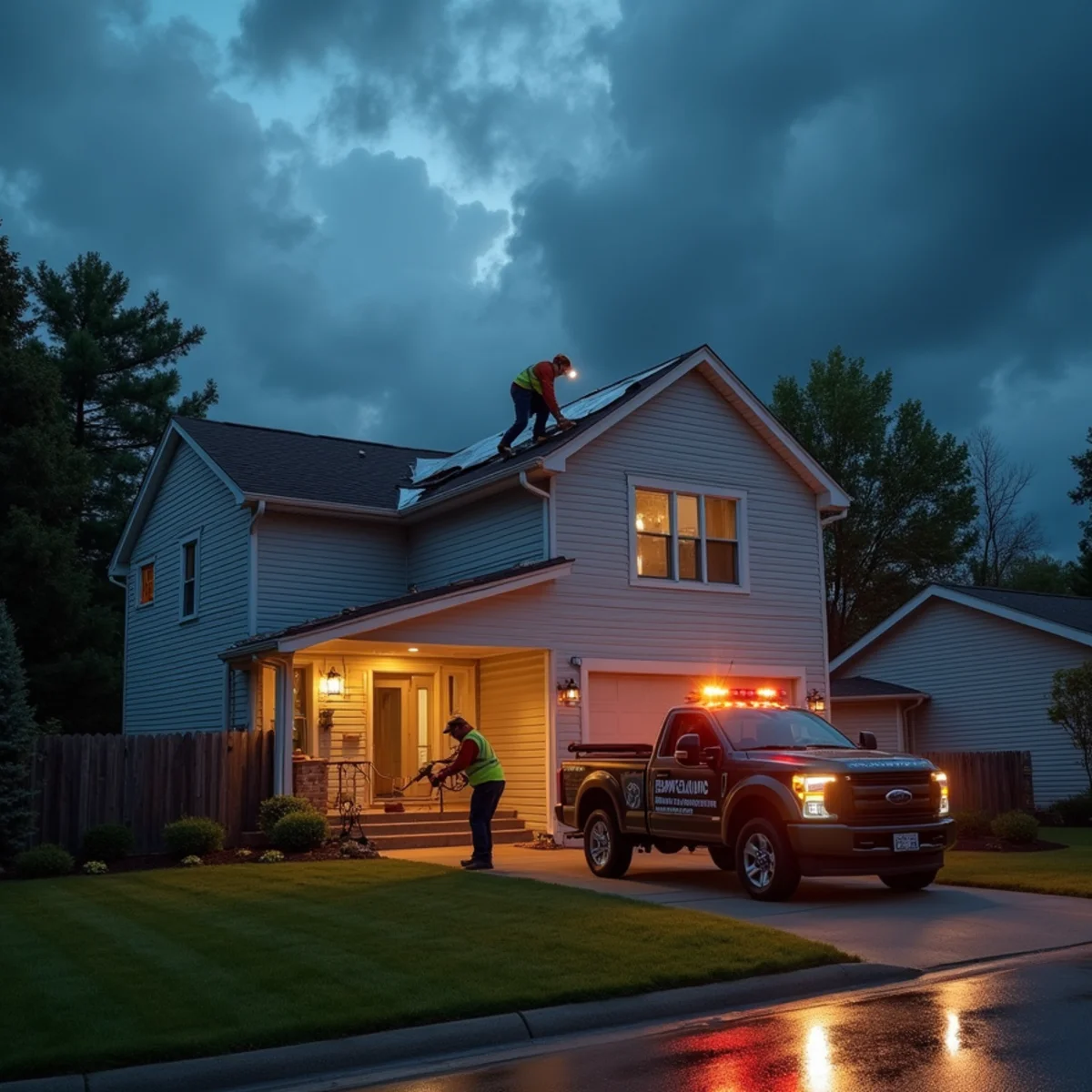
24/7 Emergency Roof Repair in Valparaiso, Indiana
A roof emergency doesn’t wait for business hours, and neither do we. If water is pouring in, a storm punched a hole in your roof, a tree limb is through the decking, or a section is sagging, call (855) 705-1940 now — we answer 24/7 and dispatch across Valparaiso and Porter County to stop the damage from getting worse.
- Locally Owned in Valparaiso
- Licensed & Insured
- 24/7 Emergency Response
- Free, No-Pressure Estimates
A roof emergency doesn’t wait for business hours, and neither do we. If water is pouring in, a storm punched a hole in your roof, a tree limb is through the decking, or a section is sagging, call (855) 705-1940 now — we answer 24/7 and dispatch across Valparaiso and Porter County to stop the damage from getting worse.
Your first job in an emergency is safety: move people and valuables away from the affected area, contain the water with buckets and towels, and photograph the damage before you clean up. Don’t climb onto a wet roof or stand under a sagging ceiling. Then let us handle the roof.
When to call for emergency service
- Active water pouring into living space or running down interior walls.
- Storm-torn or missing sections exposing the decking to the sky.
- A tree or large limb that has punctured the roof.
- A sagging roof line or ceiling — a possible structural or water-load emergency.
- Wind that stripped shingles the night before rain is forecast.
- Ice-dam backup actively dripping through ceilings and light fixtures.
What’s Included With Your Emergency Repair in Valparaiso
No vague “we’ll fix the roof.” Here’s what you get on the job, spelled out before we start:
- A 24/7 answered line with immediate containment guidance
- Rapid dispatch to stop active water entry
- Same-day emergency tarping or dry-in of the opening
- Make-safe of storm holes, tree punctures, and exposed decking
- Photo documentation of the cause and damage for your insurer
- Moisture assessment so wet materials get dried within the EPA’s 24–48-hour window
- A written scope for the permanent repair or replacement
- Coordination of the follow-up repair once the emergency is contained
What happens when you call
- 1
Triage on the phone
We assess urgency, give you immediate containment guidance, and confirm the fastest safe response.
- 2
Rapid dispatch
We head to your address to stop active water entry — often with same-day emergency tarping.
- 3
Secure & document
We tarp or make-safe the opening and photograph everything for you and, if it’s storm-related, your insurer.
- 4
Permanent repair plan
Once the emergency is contained, we scope the permanent repair or replacement so it’s done right, not just fast.

Why fast containment protects more than your roof
The EPA notes that wet building materials should be dried within 24–48 hours to reduce the risk of mold. That window is why an active leak is genuinely urgent even when the roof itself is a small repair: the longer water sits in insulation, drywall, and decking, the more of your home the storm ends up damaging — and the bigger the eventual claim and repair.
Emergency tarping and containment are about buying that time. We stop the water, document the cause, and dry-in the opening so you’re not watching your ceiling get worse while you wait for materials or an adjuster. Then we come back and fix it properly.
Why Valparaiso Homeowners Choose Anto for Emergency Repair
A real person answers, 24/7
Roof emergencies happen at night and on weekends. Our emergency line is answered around the clock so you’re not leaving a voicemail while your ceiling drips.
Phone triage that buys you time
We give you containment guidance the moment you call — where to move valuables, how to slow the water — before a crew even arrives.
Same-day make-safe
We can often tarp or dry-in the opening the same day, stopping the interior damage from spreading while materials and weather line up for the permanent fix.
Documented for your claim
We photograph the cause and the damage as we secure it, so if it’s storm-related you already have the evidence an adjuster needs.
What you do in the first hour of a roof emergency decides how bad it gets
Before a crew can reach you, the smartest moves are about limiting where the water goes, not fixing the roof. If water is pooling against a ceiling and making it bulge, the counterintuitive right move is to poke a small relief hole at the lowest point of the bulge with a screwdriver and catch it in a bucket. A ceiling holding a pool of water can collapse all at once; a controlled drain point turns a ceiling replacement into a paint touch-up and keeps the load off your drywall and light fixtures.
Move electronics and valuables clear, cut power to any circuit near active water at the breaker, and lay down buckets and towels — but do not climb onto a wet or storm-damaged roof, and don’t stand under a sagging ceiling waiting to catch drips. Photograph everything before you clean up; those first images are what an adjuster uses to tie the damage to the storm. Roofers who chase storms into the county often skip that step, whereas a local crew documents as they secure the roof.
Then get the make-safe done fast. The clock isn’t only about your roof — wet insulation and drywall need drying within a day or two, which is why we treat containment as urgent even when the eventual repair is small. Our storm damage restoration page covers what comes after the emergency is contained.
How do you avoid getting taken advantage of during a roof emergency?
An active leak is exactly the moment homeowners get pressured into bad decisions, and some crews count on it. The rule that protects you is simple: separate the emergency from the contract. A legitimate roofer stops the water first — tarps or dries-in the opening — and only then scopes the permanent repair, giving you time to think and compare. Anyone who shows up mid-crisis demanding you sign a full replacement contract on the spot, or asking for a large cash deposit before any work, is using your panic as leverage. The make-safe and the big decision are two separate steps.
Watch for the classics: a price that’s only good if you sign tonight, a promise of a “free roof,” or an offer to “eat your deductible.” Indiana law prohibits waiving a homeowner’s insurance deductible, so that pitch steers you into a non-compliant deal rather than doing you a favor — your deductible is always yours. Indiana issues no state roofing license either, so a “license number” on the side of a truck proves nothing; verify a local address, insurance, and workers’ compensation instead. Get the roof secured, photograph everything, and let the permanent repair go through a normal, documented insurance claim process on your timeline, not theirs.
What to expect when our emergency crew arrives
In a roof emergency, what you do between the call and our arrival shapes how much of your home the storm damages. When you call (855) 705-1940 we triage on the phone and give you immediate containment steps: move electronics and valuables out from under the leak, put down buckets and towels, and clear a path to the affected room so the crew can work fast when they arrive. Keep pets and kids away from the area, and never climb onto a wet or storm-damaged roof or stand under a sagging ceiling waiting to catch drips.
When the crew reaches you — day or night — we find the safest way to access the opening, secure it with a properly anchored tarp or dry-in, and photograph the cause and damage for your insurer as we work. We also check how far moisture has traveled, because wet materials should be dried within the EPA’s 24-to-48-hour window to limit mold. The make-safe is usually done in that first visit; a properly anchored emergency tarp then holds the line while we scope the permanent repair on a sound plan instead of in the middle of the storm.
You come out of that first visit with the water stopped, the opening secured, documentation an adjuster can use, and a written scope for the lasting repair. The emergency and the big repair decision stay separate — we stabilize things first so you’re never pressured into signing a major contract while water is still coming in.
What affects emergency cost
Every roof is different — these are the factors that move the number. We give you a written, line-item scope after a free inspection. Cost figures are planning benchmarks, not quotes.
- Time of day and how quickly the situation must be secured.
- Size and location of the opening and how much temporary protection it needs.
- Whether emergency tarping alone stabilizes it or immediate repair is required.
- Story height and access in wet or windy conditions.
- Whether the damage is storm-related and eligible for an insurance claim.
Emergency Repair Across Valparaiso & Porter County
We answer emergency roof calls 24/7 across Valparaiso and Porter County — active leaks in Portage and Chesterton, storm-opened roofs in Hobart, and tree-through-the-decking calls anywhere in the region. When water is coming in, distance takes a back seat to speed.
Emergency Repair FAQs
Related Roofing Services
Emergency Roof Tarping
Secure storm openings same day, prevent interior damage, and support your claim.
Learn moreRoof Leak Repair
Same-day leak detection & repair — flashing, valleys, ice-dam backups & vents.
Learn moreStorm Damage Roof Restoration
Inspection, documentation, claim support & full rebuilds after hail, wind & derechos.
Learn moreNeed Emergency Repair in the Valparaiso Area?
Call for a free inspection and a written estimate — or send us a few details and we’ll reach out.
- Licensed & Insured
- 24/7 Emergency Response
- Free, No-Pressure Estimates