Emergency Roof Tarping in Valparaiso, Indiana
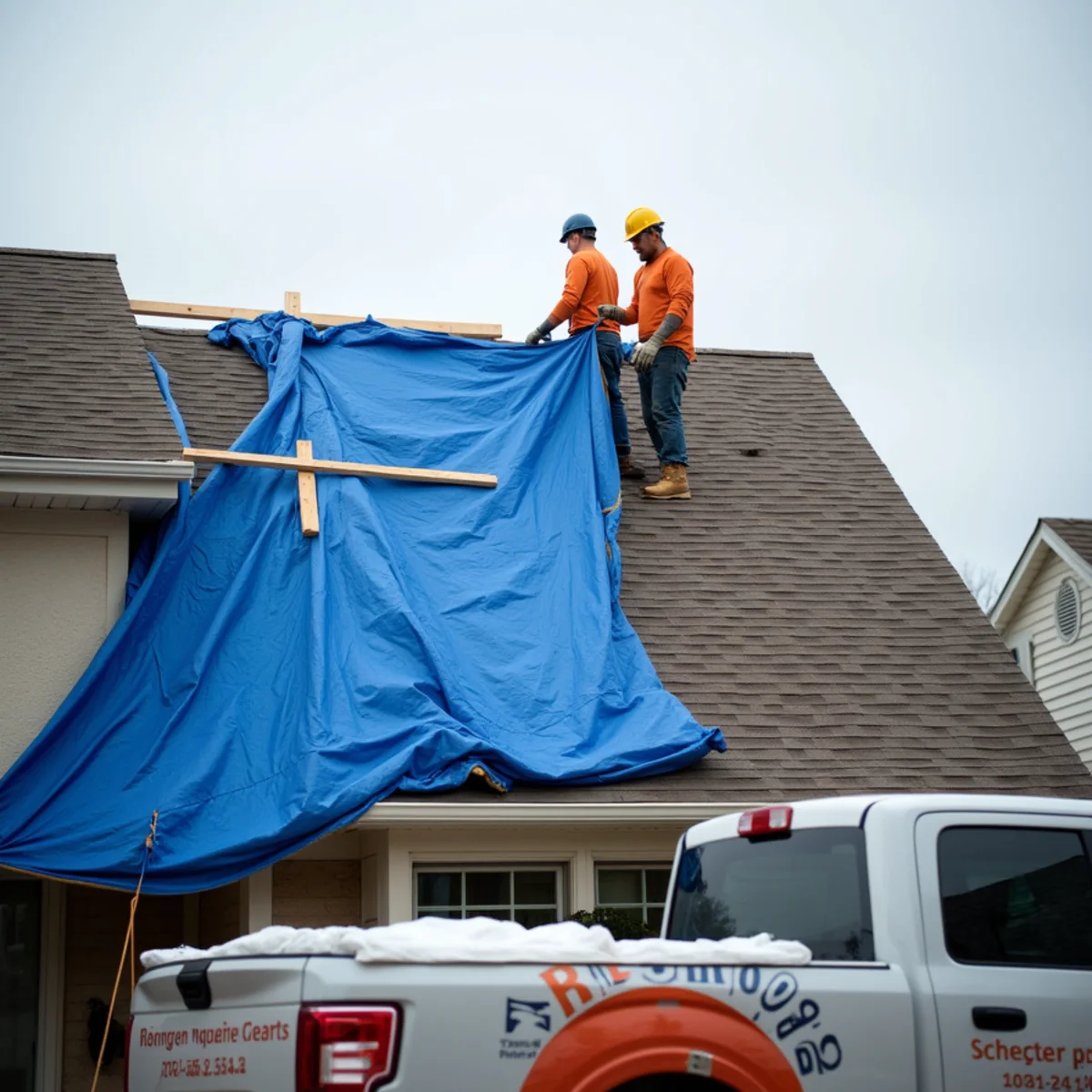
When a storm opens your roof, tarping is the emergency room visit — it stops the bleeding so the real repair can happen on a sound plan instead of in a panic. A properly installed tarp secures the opening, sheds water away from the exposed area, and keeps rain and snow out of your attic and living space until materials, weather, and (if applicable) your insurer align for the permanent fix.
- Locally Owned in Valparaiso
- Licensed & Insured
- 24/7 Emergency Response
- Free, No-Pressure Estimates
When a storm opens your roof, tarping is the emergency room visit — it stops the bleeding so the real repair can happen on a sound plan instead of in a panic. A properly installed tarp secures the opening, sheds water away from the exposed area, and keeps rain and snow out of your attic and living space until materials, weather, and (if applicable) your insurer align for the permanent fix.
We tarp roofs across Valparaiso and Porter County day or night. A good tarp job isn’t just a blue tarp thrown over a hole — it’s anchored, sealed at the edges, and pitched to drain, so it actually holds through the next storm instead of flapping loose overnight.
When you need emergency tarping
- Storm tore off shingles or a section, exposing the decking before more rain arrives.
- A tree or limb punched through the roof.
- A large area is leaking faster than a repair can be scheduled.
- You’re waiting on an insurance adjuster and need to stop further damage now.
- Wind stripped a slope the night before a storm is forecast.
What’s Included With Your Roof Tarping in Valparaiso
No vague “we’ll fix the roof.” Here’s what you get on the job, spelled out before we start:
- A 24/7 answered line and same-day make-safe response
- Assessment of the safest way to secure the opening
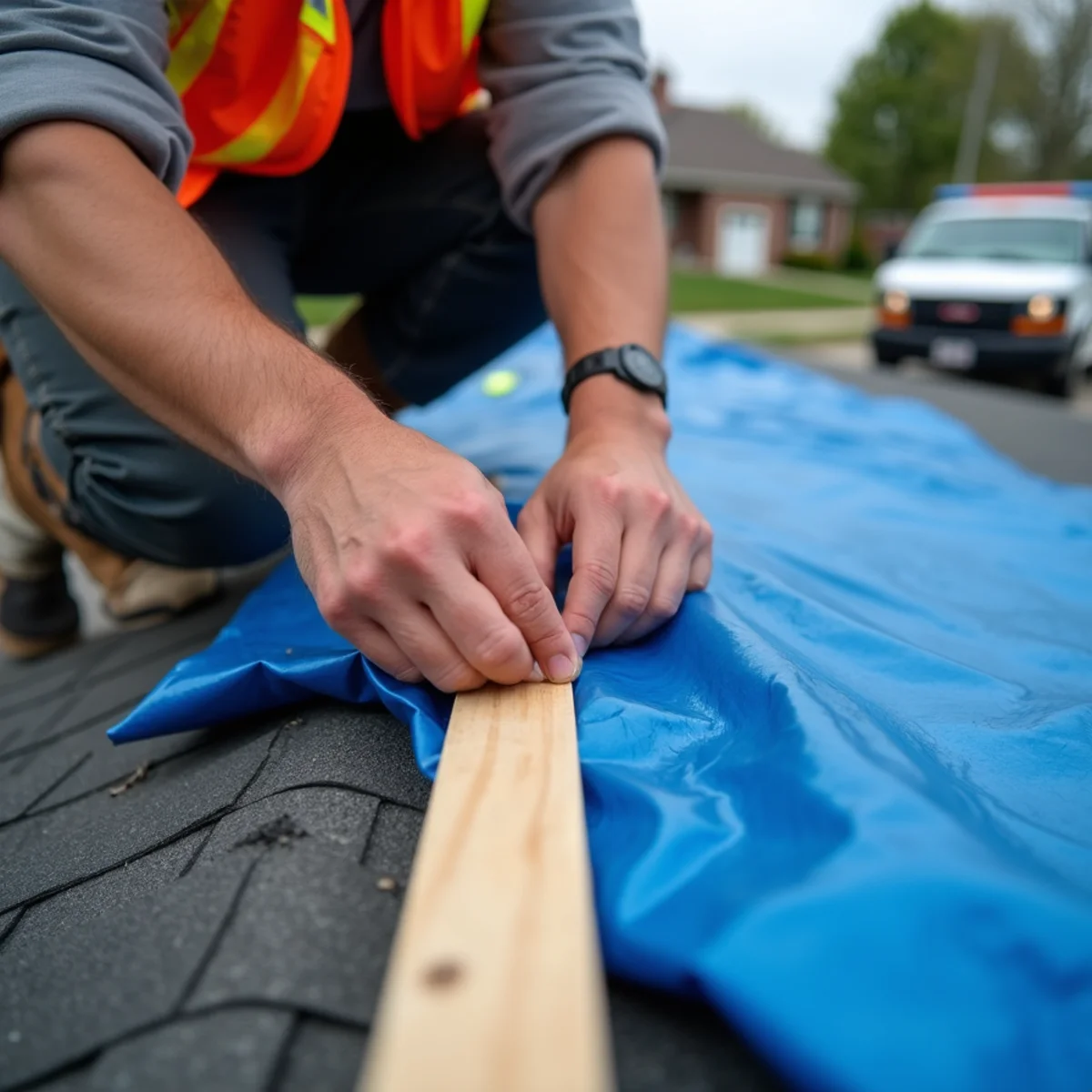
- Tarp anchored and sealed at the edges with battens
- Tarp pitched to drain rather than pond water
- Weighting or fastening appropriate to the roof and weather
- Photo documentation of the damage and the temporary cover
- Guidance for your insurance claim, including mitigation records
- Scheduling of the permanent repair once the roof is secured
How we tarp a roof
- 1
Make-safe assessment
We evaluate the opening and the safest way to secure it given weather and access.
- 2
Anchor & seal
We fasten and seal the tarp at the edges and pitch it to drain — not just drape it.
- 3
Document for your claim
We photograph the damage and the temporary cover for your records and insurer.
- 4
Schedule the real repair
With the roof secured, we plan the permanent repair or replacement without the clock running against your ceilings.
A good tarp buys you the right repair
The point of tarping is to remove time pressure. Once the opening is secured, you’re no longer forced to accept the first crew with the fastest availability or to rush a material choice while water’s coming in. You can get the roof inspected properly, let your adjuster do their job, and have the permanent repair done right.
It also protects the rest of your home. Water that keeps entering through an open roof turns a roofing repair into a drywall, insulation, and flooring project too. A tarp that holds for a couple of weeks often saves thousands in interior damage — and keeps the whole loss cleaner for your claim.
Why Valparaiso Homeowners Choose Anto for Roof Tarping
Anchored and pitched to drain
A good tarp isn’t a blue sheet thrown over a hole. We fasten and seal the edges and pitch it to shed water, so it holds through the next storm instead of flapping loose overnight.
Same-day, day or night
Our line is answered 24/7 and we prioritize securing exposed roofs across Porter County before the next round of weather arrives.
It buys you the right repair
With the opening secured, you’re not forced to rush a material choice or accept the first crew — you can get a proper inspection and let your adjuster do their job.
Documented for insurance
We photograph the damage and the temporary cover for your records, and emergency mitigation like tarping is often reimbursable on a covered claim.
What separates a tarp that holds from one that makes things worse
A tarp that survives the next storm is built, not draped. The single most important detail is running the top edge up and over the ridge, so water can never sheet underneath the high side — a tarp that stops partway up a slope just funnels rain beneath itself. From there it’s anchored with wood battens: the tarp edges are rolled around 2-by-4s and the boards are screwed through into the rafters, not weighted down with bricks and cinder blocks that shift and let the wind get a grip.
The bad version is the one you see all over a neighborhood after a storm — a blue poly sheet held down by whatever was in the garage. Its loose edges catch wind and tear, water pools in the low spots, and it often channels runoff straight to a spot that was dry before. A make-safe done wrong can cost more than the storm did.
A tarp is also strictly temporary. Poly degrades under UV in a matter of weeks, so it’s meant to hold the line while you schedule the real repair and, if it’s storm damage, let your adjuster work — not to become the roof for a season. Keep our photos and receipts, because a proper tarp is reimbursable mitigation on your claim, and insurers generally expect you to stop further damage. The insurer still decides coverage and your deductible remains yours.
Why a Northwest Indiana winter makes tarping time-critical
An exposed roof is a bigger gamble here than in a milder climate, because our weather doesn’t wait politely for your repair to be scheduled. Lake-effect snow can pile onto an open section and then melt into the attic; a freeze-thaw swing drives water into the decking, freezes it, and pries the gap wider each cycle. An opening that would sit harmlessly dry for a week in July can soak a ceiling overnight in a January thaw. Securing it before the next system — the ones National Weather Service Chicago warnings flag — is the whole point of a tarp.
The cost of waiting compounds fast. Every hour water enters, it spreads through insulation and drywall, and the EPA advises drying wet materials within 24–48 hours to limit mold. A tarp that goes up the same day usually costs a fraction of the interior repairs it prevents, and it keeps the loss cleaner if you’re filing a claim. Once the opening is secured, we can trace and fix the leak’s true entry point on a sound plan instead of in a downpour.
A tarp is temporary, not a season-long roof — poly breaks down in weeks of UV. It buys the time to do the permanent repair right. The insurer still decides coverage, and your deductible remains yours.
What to Expect When We Tarp Your Roof — and How to Prepare Inside
While you wait for the tarping crew, focus on the inside of the house and your safety — not the roof. Move electronics and valuables out from under the opening, put down buckets and towels, and cut power to any circuit near active water at the breaker. Don’t climb up to look; a wet, storm-damaged roof is exactly where people get hurt. If you can safely photograph the damage from the ground, do it — those images document the loss for a claim — and clear a path to the affected area so we can move fast when we arrive.
A proper tarp is built, not draped. We run the top edge up and over the ridge so water can’t sheet underneath, roll the edges around wood battens fastened into the rafters so wind can’t peel it loose, and pitch it to drain rather than pond. That engineering matters here: lake-effect snow and freeze-thaw will pry at any gap the next system — the kind the National Weather Service Chicago warnings flag — finds overnight. Most tarping calls are secured the same day, often within a couple of hours of arrival.
With the opening sealed, the clock stops running against your ceilings and you’re no longer forced to rush a repair. We photograph the cover for your records, and once weather and materials align we move to the permanent storm restoration. A tarp is temporary — poly breaks down in weeks of UV — so we schedule the real repair right behind it. Insurers generally expect you to prevent further damage and the mitigation is often reimbursable, though the insurer decides coverage and your deductible stays yours.
What affects tarping cost
Every roof is different — these are the factors that move the number. We give you a written, line-item scope after a free inspection. Cost figures are planning benchmarks, not quotes.
- Size of the opening and how much tarp and anchoring it needs.
- Roof pitch, height, and access in wet or windy conditions.
- Time of day and how urgently it must be secured.
- Whether tarping is a stand-alone service or part of a storm-restoration project.
- Whether the cost is folded into a covered insurance claim.
Roof Tarping Across Valparaiso & Porter County
We tarp and make-safe storm-opened roofs across Valparaiso and Porter County — wind-stripped slopes in Chesterton, tree-through-the-roof calls in Hobart, and any active opening in the region that needs to be secured before more rain or snow gets in.
Roof Tarping FAQs
Related Roofing Services
24/7 Emergency Roof Repair
Active leaks, storm holes, collapse risk — we answer 24/7 with rapid dispatch.
Learn moreStorm Damage Roof Restoration
Inspection, documentation, claim support & full rebuilds after hail, wind & derechos.
Learn moreRoof Leak Repair
Same-day leak detection & repair — flashing, valleys, ice-dam backups & vents.
Learn moreNeed Roof Tarping in the Valparaiso Area?
Call for a free inspection and a written estimate — or send us a few details and we’ll reach out.
- Licensed & Insured
- 24/7 Emergency Response
- Free, No-Pressure Estimates