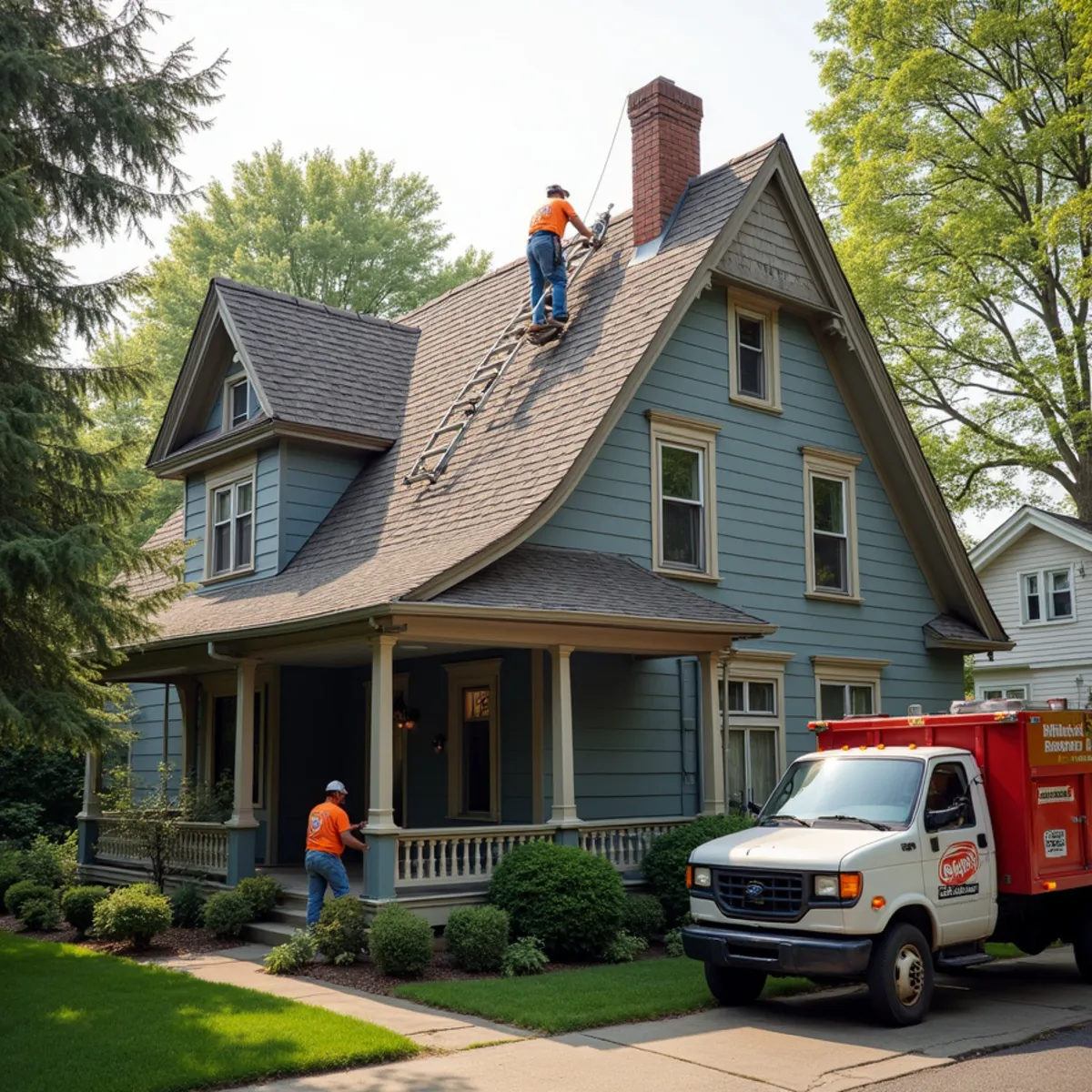
A derecho can strip shingles in minutes. Here is how to prepare your Northwest Indiana roof for straight-line winds over 80 mph.
A derecho is a fast-moving line of thunderstorms that produces widespread straight-line wind damage over hundreds of miles. Unlike a tornado, which carves a narrow path, a derecho hits everything under it at once, and gusts of 80 mph or more are common. Northwest Indiana sits squarely in the corridor where these storms track, usually late spring into summer, and when the National Weather Service Chicago issues warnings for one, your roof is the part of your house most exposed.
The good news is that straight-line wind damage is largely preventable with a roof that is in good shape and properly fastened. The bad news is that a roof with lifted shingles, loose flashing or aging fasteners can peel in minutes. This guide covers what to check before the season and what to do after. If a storm already caught you, prompt wind damage roof repair keeps a lifted edge from becoming a torn-open deck.
How Wind Actually Damages a Roof
Wind does not usually rip a roof off all at once. It works an edge loose first. When a gust catches a shingle tab that has lost its adhesive seal, it lifts it, and once one shingle lifts, the wind gets under the next one. On a shingle roof, the failure marches uphill from the eaves and rakes, which is exactly where the wind pressure is highest. That is why edge sealing and starter strips matter so much.
The most vulnerable spots are the perimeter, the ridge, and anywhere flashing meets a wall or chimney. A roof that survives a derecho is one where those details were done right and maintained.
Before the Season: A Wind-Readiness Check
Late spring is the time to get ahead of it. Here is what a wind-readiness inspection covers:
- Loose, lifted or missing shingles, especially along eaves and rakes
- Shingle tabs that have lost their adhesive seal strip
- Deteriorated or backed-out nails and popped fasteners
- Flashing at chimneys, walls and skylights that is loose or unsealed
- Ridge caps and ridge ventilation components that are lifting
- Overhanging tree limbs that could fall or whip the roof
- Gutters and fascia that are pulling away from the house
Any one of these is a foothold for the wind. Sealing them down, re-nailing loose shingles, and securing flashing before the season dramatically lowers your odds of major damage.
Why Older Roofs Are More at Risk
Asphalt shingles rely on a self-sealing adhesive strip that bonds each course to the one below after a few warm days. Over years of Indiana heat and freeze-thaw, that seal weakens and shingles get brittle. An older roof that looks fine on a calm day can shed shingles in a derecho because the seals have let go. If your roof is well into its second decade, a wind event is often what finally forces a decision, and a planned replacement beats an emergency one.
After the Storm: What to Do
Once the line passes and it is safe, do a ground-level check. Look for shingles in the yard, lifted or missing tabs, and debris impact. Do not climb up in the wind or on a wet roof.
- Photograph any damage and the debris from the ground for your records.
- Cover active leaks from inside with buckets and move belongings clear.
- Get any wet insulation or drywall drying within 24 to 48 hours per EPA guidance.
- Call a roofer for an inspection and emergency tarping if the roof is open.
- If damage is significant, start the insurance process with your storm date.
Full-scale storm damage roof restoration after a derecho often runs through insurance. Remember that your deductible is yours to pay under Indiana law, and no honest contractor will offer to absorb it or promise a free roof.
Local Roofs, Local Wind
Homes in open areas like South Haven and Boone Grove catch more wind than sheltered subdivisions because there are fewer windbreaks. If your house sits on open ground or a rise, wind readiness is not optional, it is the difference between losing a few shingles and losing a roof.
Prepare Your Roof Before the Next Line Moves In
Derecho season comes every year, and the roofs that come through it are the ones that were ready. Call Anto Roof Replacement & Repair at (855) 705-1940 for a wind-readiness inspection. We will find the footholds a gust would exploit and lock them down before the next warning goes up.
Why the Nailing Pattern Decides Whether Your Roof Holds
Two roofs can use the identical shingle and perform completely differently in an 80 mph line, and the reason is usually hidden under the shingle: the nailing. Most architectural shingles carry a higher wind rating only when they are installed with six nails per shingle instead of four, driven flush in the reinforced nailing zone, not high and not overdriven through the mat. A crew rushing a job drives four nails and moves on. When the derecho hits, the difference between a four-nail and a six-nail roof is the difference between losing a ridge cap and losing the field.
The starter course is the other quiet hero. A proper starter strip with its own sealant runs along the eaves and up the rakes, bonding the first shingles down so wind cannot catch an edge and peel uphill. Cut-up three-tabs used as starter, or no starter at all on the rakes, leave the most wind-exposed edge of your roof unsealed. On an aging roof, the seals that were installed correctly may still have let go with age, which is why our look at asphalt shingle lifespan in Indiana matters for wind readiness too.
- Six nails per shingle, flush and in the reinforced nailing zone
- A dedicated sealed starter strip along every eave and rake
- Hand-sealing the rake edges and any tabs disturbed during install
- Ridge caps rated and fastened for the same wind exposure as the field
For open-ground homes around Valparaiso, we verify these details on an existing roof and correct what we can before the season, because a roof is only as wind-worthy as its weakest edge.
Is a Wind-Rated Shingle Upgrade Worth the Extra Cost?
When a roof is due for replacement anyway, the moment to buy wind performance is right then, because the upgrade is a small slice of a job you are already paying for. A standard architectural asphalt roof lands near a planning benchmark of 15,991 dollars on an average home, and stepping up to a higher-wind or impact-resistant designer shingle, benchmarked closer to 19,920 dollars, buys a roof engineered to hold in the 80-mph straight-line winds a derecho throws. Spread over the 20-plus years the roof will stand, that difference is modest.
- A higher wind rating and a reinforced nailing zone built to resist uplift
- Impact-resistant Class 4 shingles that also shrug off hail, our other regular threat
- Fewer blow-offs, which means fewer emergency repairs and interior water events
- A possible premium credit, since some carriers discount for Class 4 roofs, so ask your agent
The other half of the value is timing. Replacing a roof whose seals have already let go, on your own schedule before the season, costs far less than an emergency replacement after a storm peels the field and rain reaches the drywall. These figures are planning benchmarks, not quotes, and on a covered claim your deductible remains yours to pay under Indiana law. Homeowners around Hobart weighing the upgrade can measure it against the full roof replacement cost breakdown before deciding.
Wind-Damage Myths That Leave Roofs Exposed
A derecho does not read the assumptions homeowners carry about wind, and several of the most common ones are exactly why sound-looking roofs still lose their field in an 80-mph line. Sorting the myths from the mechanics is part of getting ready before the National Weather Service Chicago posts the next warning.
- Myth: a newer roof cannot blow off. Fact: a four-nail install or unsealed rake edge on a two-year-old roof lifts as readily as an old one; fastening, not age, decides it.
- Myth: if no shingles are missing, there is no damage. Fact: wind creases and breaks the seal without removing the tab, leaving a shingle that leaks and blows off in the next gust.
- Myth: metal roofs are wind-proof. Fact: metal performs very well, but a poorly fastened panel or an unsealed edge still peels; the system detailing matters as much as the material.
- Myth: wind damage needs a separate policy. Fact: straight-line wind is generally a covered peril on a standard homeowners policy, though your deductible remains yours under Indiana law.
The practical takeaway is that wind finds the weakest edge, so the fix is sealing and fastening those edges before the season, and covering an opening fast with emergency roof tarping when a storm gets ahead of you. Homeowners on open ground around Hebron, where there is little to break the wind, gain the most from retiring these myths and hardening the perimeter first.