A plain comparison of standing seam and exposed fastener metal roofing to help Indiana homeowners choose the right system.
Metal roofing has moved well beyond barns and pole buildings. More Indiana homeowners are choosing it for the long life and the way it sheds snow and ice through our hard winters. But metal is not one thing. The two main systems, standing seam and exposed fastener, work differently, cost differently, and last differently. Choosing between them is the first real decision, and it pays to understand the trade-offs before you do.
Both are good roofs when installed right. The question is which fits your home, your budget, and how long you plan to stay. Here is a straight comparison.
Exposed Fastener Metal Roofing
Exposed fastener panels are screwed straight through the face of the metal into the decking or purlins, with the screw heads visible on the surface. Those screws use a rubber washer to seal each hole. This is the more affordable metal option, and it goes on faster, which keeps labor down. It is the system you see most often on outbuildings, but it works on homes too.
The trade-off is in those exposed screws. The rubber washers age, and metal expands and contracts with temperature, which over the years can loosen fasteners and open tiny leak paths. That means periodic maintenance, retorquing or replacing screws down the line. Our metal roofing team installs exposed fastener systems where the budget calls for it and sets expectations honestly about that upkeep.
- Lower upfront cost and faster installation.
- Screw heads and rubber washers are exposed on the surface.
- Washers age and fasteners can loosen with thermal movement.
- Requires periodic maintenance of the fasteners over its life.
Standing Seam Metal Roofing
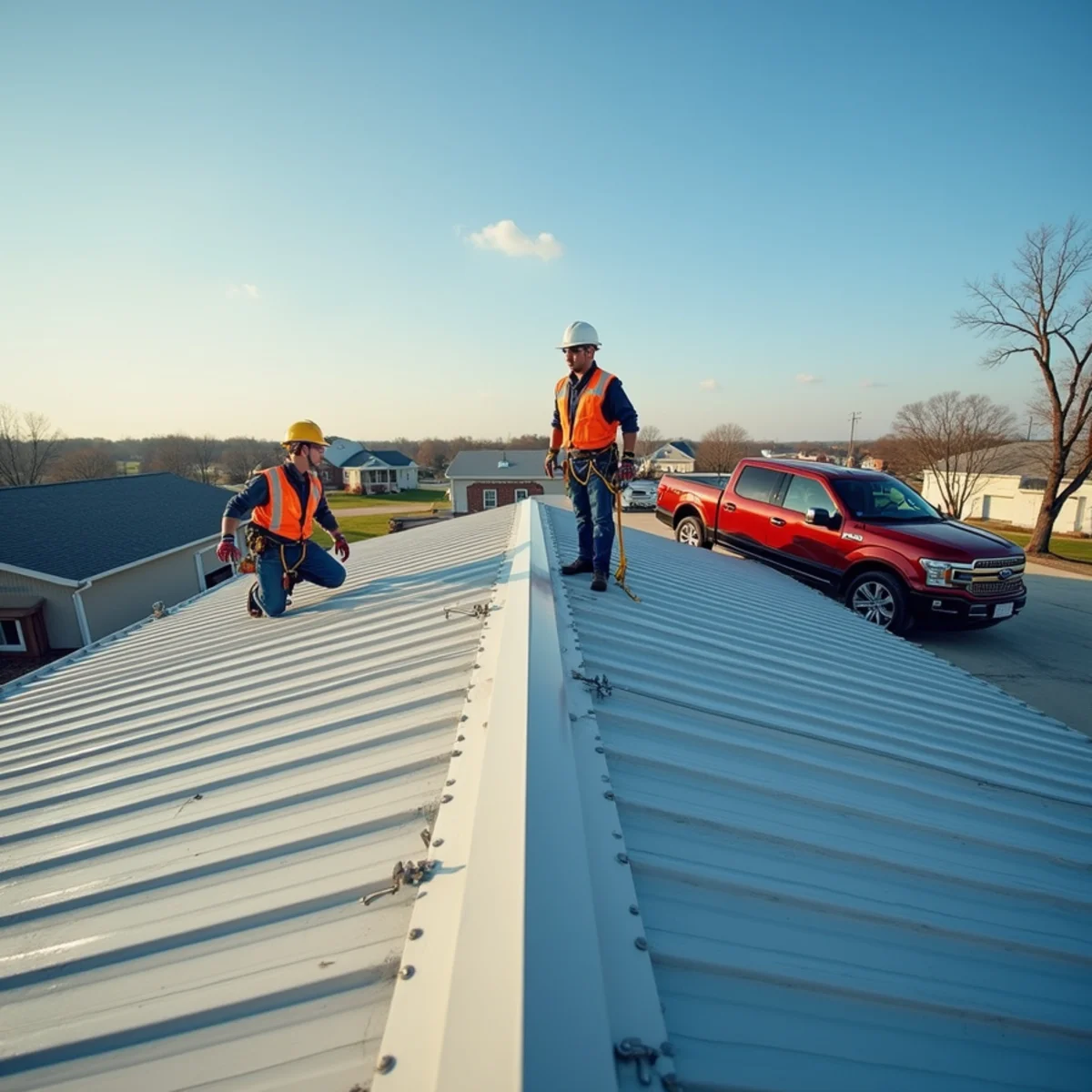
Standing seam hides the fasteners entirely. The panels lock together at raised vertical seams, and clips beneath the seams fasten to the decking, so nothing penetrates the exposed surface of the metal. Those clips also let the panels expand and contract freely with temperature, which matters a great deal in a freeze-thaw climate that swings from below zero to summer heat.
The result is a roof with no exposed holes to leak and very little maintenance. It sheds snow cleanly, resists ice dams, and routinely lasts 40 to 70 years. The trade-off is cost: standing seam carries a planning benchmark near 44,270 dollars on an average roof, well above asphalt, because the material and the skilled labor to install it correctly both cost more.
- Concealed clips and fasteners, no holes through the exposed surface.
- Panels expand and contract freely, ideal for freeze-thaw swings.
- Very low maintenance and a 40 to 70 year lifespan.
- Higher upfront cost and requires an experienced installer.
Which One Fits Your Home
The right choice comes down to budget and time horizon. If you plan to stay in the home for decades and want a roof you can largely forget about, standing seam rewards the higher investment with longevity and minimal upkeep. If you want the durability of metal at a lower entry cost and do not mind periodic fastener maintenance, exposed fastener is a sound choice. And for many homes, a quality asphalt shingle roof still makes the most sense on cost alone.
Installation Matters More Than the Material
Neither metal system performs if it is installed poorly. Standing seam in particular demands an installer who understands panel movement, clip spacing, and proper flashing at every penetration. A beautiful panel over sloppy flashing still leaks. This is where working with a crew experienced in residential roofing systems pays off. Homeowners across Kouts roofing and Nappanee roofing service areas come to us for metal work done to spec.
The Bottom Line
Standing seam hides its fasteners, moves with the seasons, and lasts decades with little upkeep, at a higher upfront cost. Exposed fastener costs less and installs faster but asks for periodic screw maintenance. Both are strong in Indiana winters when installed correctly, and installation quality matters more than the label. To talk through which metal system fits your home and budget, call Anto Roof Replacement & Repair at (855) 705-1940.
How Does Snow and Ice Behave Differently on Each Metal System?
Homeowners drawn to metal for an Indiana winter usually picture snow sliding off cleanly, and it does, but how it sheds depends heavily on which system you choose and what you add to it. The smooth, continuous face of standing seam and the ribbed surface of exposed fastener handle a lake-effect dump differently, and getting that wrong creates its own hazards below the eave.
- Standing seam's slick, seam-broken surface sheds snow in large sheets, fast and heavy.
- Exposed fastener ribs give snow slightly more to grip, so it tends to release in smaller loads.
- Both shed far more readily than asphalt, which means snow guards over doorways and walkways are not optional.
- Concealed clips on standing seam let the panel move under snow load without stressing a fastener hole.
The Ice-Dam Advantage and Its Limits
Metal's biggest winter selling point is honest: a smooth metal surface gives ice far less to cling to than a granular shingle, so metal roofs form ice dams less readily. But metal is not magic. If the attic below is warm and poorly vented, meltwater will still refreeze at a cold eave, and a metal panel with a failed sealed seam at the bottom edge can still let backed-up water in. The roof material never fixes an attic heat-loss problem; it only changes how the symptom shows up.
Metal sheds snow beautifully. Standing under the eave when a full slope lets go is how homeowners learn to install snow guards.
There is a real safety planning piece here that a good installer raises before the first panel goes up: where the snow will land, and who walks there. Snow guards, properly placed, hold the load until it melts gradually instead of avalanching onto a porch, a car, or a person. We plan that into every metal roofing layout, and homeowners around Nappanee roofing service areas appreciate thinking it through before winter rather than after the first slide.
Does Metal Pay for Itself Over the Life of the Roof?
The sticker shock of metal is real, but the fairer comparison is not the day-one price, it is the cost spread across the decades each roof actually lasts. Looked at that way, the gap between metal and asphalt narrows, and for some homeowners it closes entirely.
- Asphalt carries a planning benchmark near 15,991 dollars and lasts roughly 15 to 25 years in our freeze-thaw climate, so it is often replaced once or twice across a long ownership.
- Standing seam benchmarks near 44,270 dollars but routinely lasts 40 to 70 years, frequently a once-in-a-lifetime roof.
- Metal’s low maintenance and reflectivity trim the ongoing costs asphalt quietly accumulates.
- Resale and insurance considerations can favor a durable metal roof, though that varies by buyer and carrier.
Spread over the years each system serves, a metal roof that never needs replacing can rival two asphalt roofs plus their tear-offs. The math depends on how long you will own the home, which is why it is worth comparing metal against the asphalt replacement benchmarks for your own timeline rather than the headline number. Homeowners around Valparaiso service areas planning to stay put for the long haul are the ones for whom metal most often pays for itself; those moving in a few years usually pencil out toward asphalt.
Metal Roofing Myths, Sorted Out for Indiana Homes
Metal roofing carries a lot of secondhand reputation, some of it decades out of date. Before you rule it in or out, it helps to separate what is actually true of a modern metal roof from the myths that follow it around.
- Myth: metal roofs are loud in the rain. Fact: installed over solid decking and underlayment, a metal roof is no louder than asphalt, not the tin-barn sound people picture.
- Myth: metal attracts lightning. Fact: it does not, and because metal is non-combustible, it is actually less likely to ignite if lightning strikes nearby.
- Myth: a metal roof will rust out. Fact: modern panels carry factory coatings and finishes engineered to resist corrosion for decades.
- Myth: you cannot walk on it and it dents easily. Fact: quality panels are walkable with care, and standing seam in particular is built to take Indiana weather.
Most objections to metal are answers to a 1950s barn roof, not the coated, sealed systems going on homes today.
The real decision is not about noise or lightning; it is about budget and how long you plan to stay, since standing seam carries a planning benchmark near 44,270 dollars and lasts decades. If that horizon has you comparing it against a fresh asphalt roof, our look at how long asphalt lasts here frames the tradeoff, and a full roof replacement estimate puts real numbers on your specific home. Homeowners weighing metal deserve facts, not folklore, before they spend.