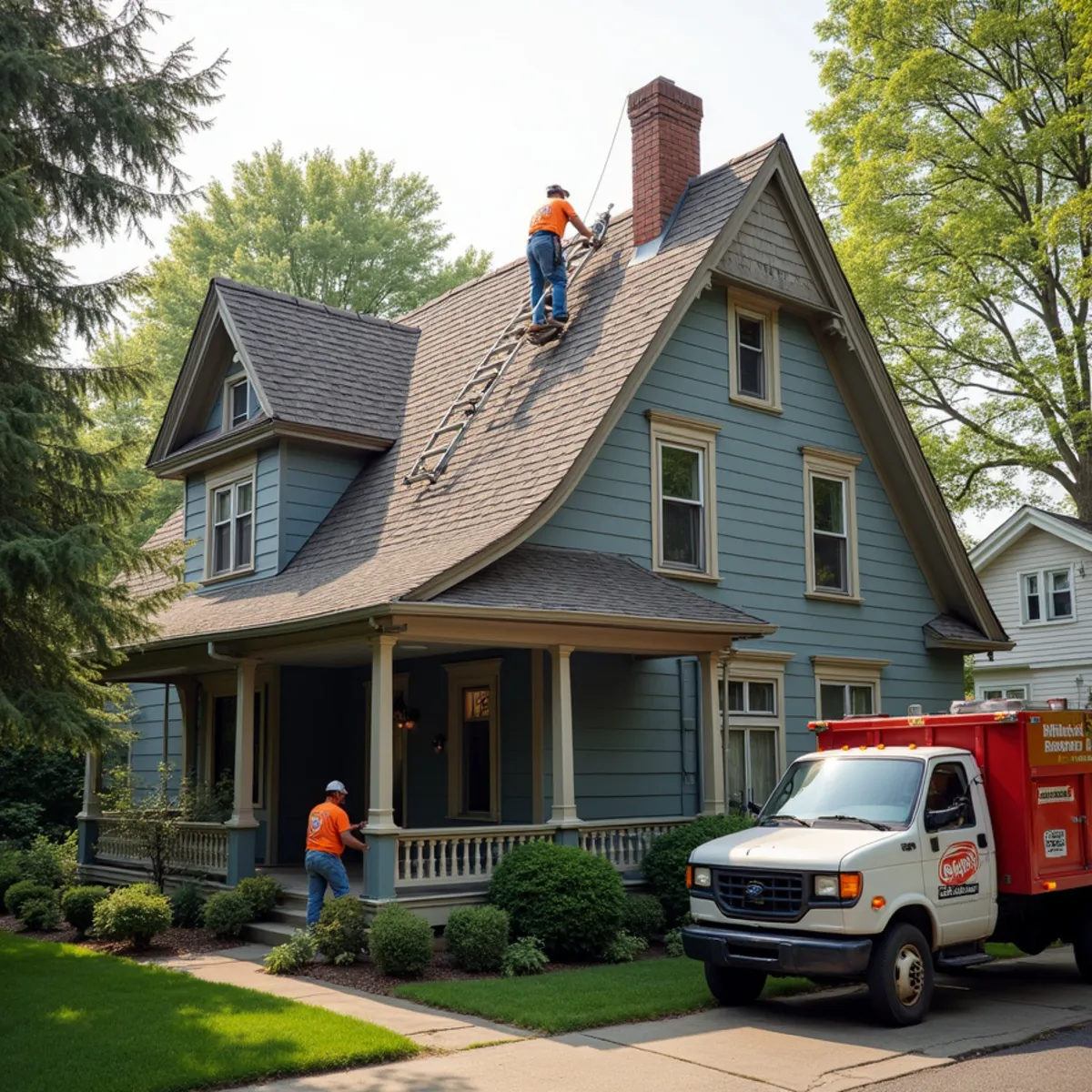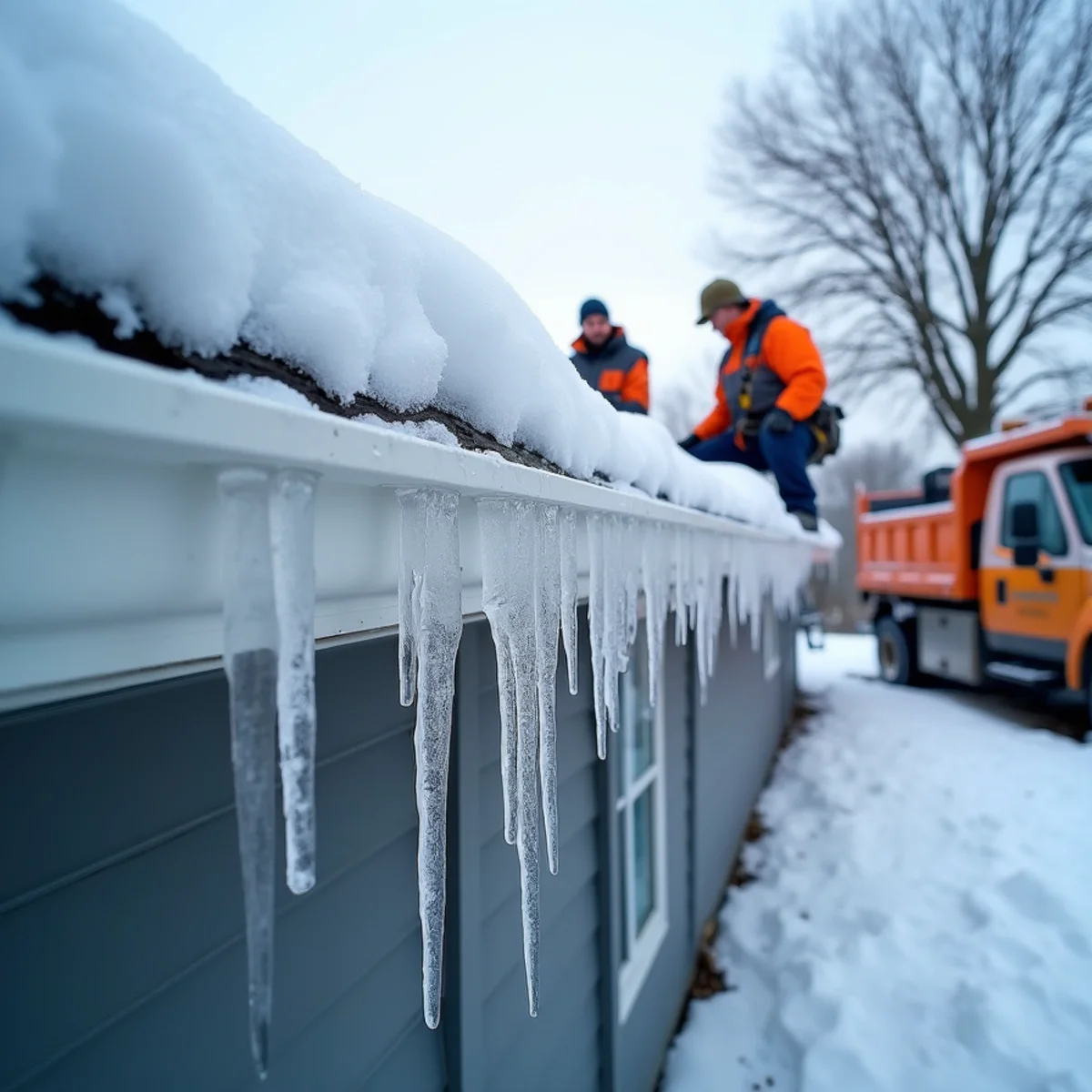
How ice dams form, how to relieve one safely without wrecking your shingles, and the point where you need a roofer.
In an Indiana winter, a ridge of ice along the edge of your roof is more than a photo of icicles. It is a sign that water may be backing up under your shingles and heading for your ceilings. Ice dams form during the freeze-thaw cycles that define our climate, and when they trap meltwater, that water has nowhere to go but sideways and down into the house.
The good news is that you can relieve the immediate pressure safely from the ground. The bad news is that the aggressive removal methods people reach for, like hatchets and metal shovels, tend to destroy the very shingles they are trying to protect. Here is how to handle an ice dam without making things worse, and when the situation calls for a professional.
How Ice Dams Form
The mechanism is straightforward. Heat escaping into the attic warms the upper part of the roof deck, melting the snow above it. That meltwater runs down until it reaches the cold eave, which hangs over unheated air, and there it refreezes. Over repeated freeze-thaw cycles the ice builds into a dam. New meltwater then pools behind the dam and works its way under the shingles, past any underlayment that is not rated for standing water, and into the structure.
- Warm attic air melts snow on the upper roof.
- Meltwater refreezes at the cold overhanging eave.
- The ice ridge grows and traps a pool of water behind it.
- Trapped water backs up under shingles and leaks inside.
Safe Steps You Can Take Now
If water is already coming inside, your first move is to relieve the trapped water, not to demolish the ice. From the ground, a roof rake can pull snow off the lower few feet of roof so less meltwater feeds the dam. Filling a nylon stocking with calcium chloride ice melt and laying it across the dam will melt a channel that lets the trapped water drain. Inside, manage the leak the same way you would any other: buckets, plastic, and airflow on wet materials within that 24 to 48 hour window the EPA recommends.
- Rake snow off the lower roof edge from the ground.
- Lay a stocking of calcium chloride across the dam to melt a drainage channel.
- Contain interior water and dry wet materials quickly.
- Keep the attic door closed to avoid pushing more warm air up top.
What Not to Do
Do not climb an icy roof, and do not attack the dam with an axe, hammer, or metal shovel. Chopping at ice cracks shingles, tears flashing, and gouges the decking, turning a leak into a full repair. Rock salt meant for driveways can stain and corrode, so stick to calcium chloride made for this purpose. And never run an open flame or torch near your roof to melt ice.
When to Call a Roofer
Call for help when water is actively entering the home, when the dam is too high to reach safely from the ground, or when you see icicles the size of your arm hanging off the gutters. At that point the risk to you and to the roof is too high for a ladder and a stocking of ice melt. Our emergency roof repair team can safely relieve a dangerous dam and stop the interior water. If the ice has already forced a leak, our roof leak repair crew traces the intrusion and seals it once conditions allow.
Homeowners across South Bend roofing service areas deal with ice dams every winter, and getting a professional on it early keeps a seasonal nuisance from becoming a ceiling replacement.
Preventing the Next One
The long-term fix for ice dams is not better ice melt, it is a colder, better-sealed roof deck. Sealing attic air leaks, adding insulation, and improving ridge ventilation keep the roof surface cold enough that snow does not melt and refreeze at the edge. Ice-and-water shield along the eaves adds a waterproof layer for the times a dam still forms. We can assess these during any repair visit for homes in Michigan City roofing and nearby areas.
The Bottom Line
An ice dam is a plumbing problem disguised as a winter decoration. Relieve trapped water safely from the ground, never chop at the ice, and call a professional the moment water comes inside or the dam gets out of reach. When an Indiana cold snap turns your roofline into a hazard, call Anto Roof Replacement & Repair at (855) 705-1940 and we will handle it without wrecking your shingles.
Why Do Some Roofs Get Ice Dams Every Year and the House Next Door Never Does?
Drive down any street after a snow and you will see it: one roof lined with icicles and a thick ridge of ice at the eave, the identical house beside it clean. The difference is almost never the weather, which hits both roofs the same. It is what is happening inside the attic. Ice dams are a heat-loss problem wearing a winter costume, and the roofs that dam year after year are leaking warm air the roofs beside them are not.
- A dropped soffit or open chase over a kitchen or bath dumps warm, moist air straight against the deck.
- Recessed lights and bath fans that vent into the attic instead of outside melt snow in patches.
- Compressed or thin insulation over the exterior wall top plate leaves a warm band right above the cold eave.
- Blocked soffit vents stop the cold intake air that would otherwise keep the deck uniformly cold.
The Snow Pattern That Diagnoses Your Attic
You can read the health of your attic from the driveway on a snowy morning. A roof that keeps an even blanket of snow is staying uniformly cold, which is what you want. Bare stripes, early-melting patches over certain rooms, or a clear line above the exterior walls are the roof telling you exactly where heat is escaping. Photograph those patterns; they point a contractor straight to the air leaks worth sealing.
An even blanket of snow is a compliment to your insulation. Bare stripes are a receipt for your next heating bill.
Relieving the ice is the emergency; fixing the attic is the cure. Air-sealing and insulation work often pairs naturally with any roof leak repair we do after a dam forces water inside, and homeowners around Michigan City roofing service areas who address the attic stop repeating the same January every winter.
What an Ice Dam Costs You If You Only Fight the Symptom
Chipping and salting a dam every January feels like handling the problem, but it is really renting a solution that never pays down the principal. The water backing up behind a dam does its damage quietly and repeatedly, and the tab for treating only the symptom adds up faster than the one-time cost of fixing the cause.
- Each interior leak event can mean stained drywall and wet insulation, a moderate repair in the 600 to 2,500 dollar planning-benchmark range once materials are replaced.
- Repeated saturation rots decking and fascia, work that only surfaces during the next roof job and inflates it.
- Emergency removal calls winter after winter are a recurring bill with no lasting return.
- Higher heating costs ride along, since the escaping attic heat that feeds the dam is also money leaving through the roof.
By contrast, air-sealing the attic, adding insulation, and improving ventilation is a one-time investment that stops the melt-and-refreeze cycle at its source and lowers the heating bill at the same time. When a dam has already forced water inside, pairing the leak fix with that attic work through a focused roof repair turns a yearly emergency into a solved problem. Homeowners around Cedar Lake service areas who do the math usually find the cure costs less over a few winters than the endless symptom treatment.
Ice Dam Myths Worth Unlearning Before Winter
Few roofing problems attract as much folklore as ice dams, and acting on the wrong belief can cost you shingles, money, or a fall off a ladder. Here are the myths we hear every January and what is actually true.
- Myth: ice dams mean your gutters failed. Fact: dams form on the roof edge from attic heat loss, and would form with no gutters there at all.
- Myth: more attic insulation alone will fix it. Fact: insulation helps only if you also air-seal the leaks and keep the soffit vents clear so the deck stays cold.
- Myth: chipping the ice off protects the roof. Fact: an axe or metal shovel cracks shingles and tears flashing, turning a leak into a full repair.
- Myth: a metal roof makes you immune. Fact: metal sheds snow better, but a warm, poorly vented attic can still refreeze meltwater at the eave.
An ice dam is a heat-loss problem wearing a winter costume. Fight the heat loss, not the ice.
The lasting cure is a colder, tighter roof deck, not a sharper tool. Because gutters take the blame unfairly, our companion guide on how gutters and ice dams really interact is worth a read before you spend on the wrong fix. Homeowners across Valparaiso service areas who unlearn these myths stop repeating the same leak winter after winter.