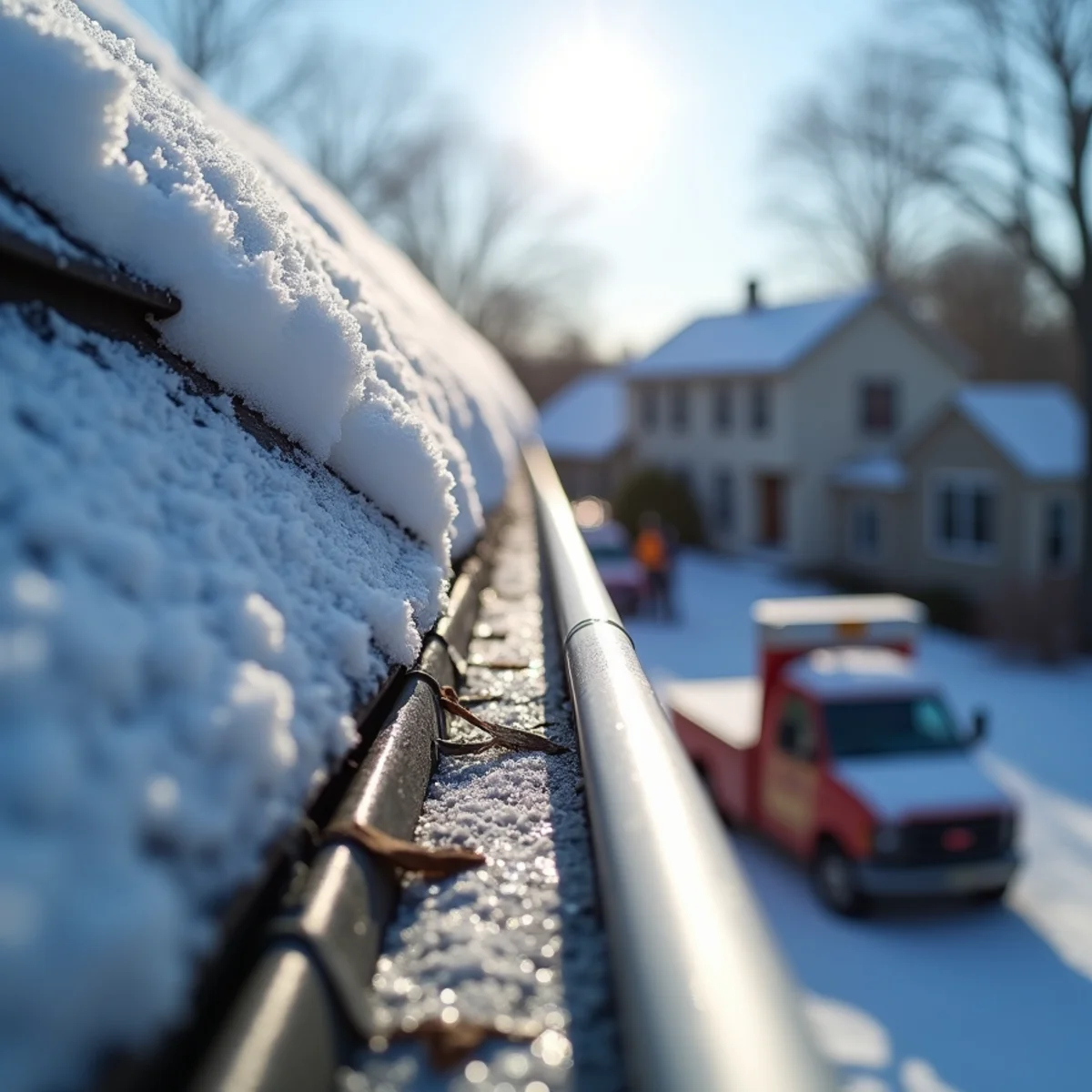
Ice dams start on the roof, not in the gutter, but your gutter system still plays a role in the damage they cause.
Every winter we get calls from homeowners staring at a thick ridge of ice along the edge of their roof, icicles hanging off the gutters, and a water stain spreading across a bedroom ceiling. That ridge is an ice dam, and it is one of the most misunderstood roofing problems in Northwest Indiana. People blame the gutters, but the gutters are usually a symptom, not the cause.
The truth is that ice dams are an attic and roof problem first. Your gutter system matters, but not in the way most people think. This guide explains how ice dams actually form, what role gutters play, and what you can do before the deep freeze sets in. If you already have water coming in, you want a fast roof repair before the melt saturates your ceiling.
How an Ice Dam Really Forms
An ice dam forms when heat escaping from your living space warms the roof deck, melts the underside of the snow pack, and sends meltwater running down the roof. When that water reaches the cold roof edge and the gutter, which hang out beyond the heated part of the house, it refreezes. Repeat that cycle over several cold days and you build a growing wall of ice. The dam then traps liquid water behind it, and that water backs up under the shingles and finds its way into your home.
Three things drive the cycle: heat loss from the attic, poor ventilation, and snow cover. Cold days after a National Weather Service Chicago warning for lake-effect snow are prime ice-dam conditions because you get heavy snow followed by sub-freezing temperatures.
Where Gutters Fit In
Gutters do not cause ice dams, but they give the ice a place to anchor and grow. A gutter full of frozen leaves and debris freezes solid faster and holds ice longer, which extends the dam and adds weight to your roof edge. Overflowing or sagging gutters also dump water against the fascia and soffit, where it can freeze and cause rot.
A clean, properly pitched gutter system with functioning downspouts will not stop an ice dam on its own, but it does three useful things: it moves fall rain away from the foundation, it reduces the debris that freezes at the edge, and it keeps meltwater flowing during thaws. Upgrading to protected gutter installation and guards keeps leaves out so the system can drain when temperatures climb above freezing.
- Clogged gutters freeze faster and hold ice longer at the roof edge
- Sagging or undersized gutters overflow onto fascia and soffit
- Blocked downspouts back water up under the roof edge during thaws
- Guards reduce debris buildup that anchors and extends ice dams
The Real Fixes: Attic and Edge Protection
Because ice dams start with heat escaping into the attic, the durable fixes happen above your ceiling and at the roof edge.
Air Sealing and Insulation
Sealing air leaks around light fixtures, attic hatches and top plates, then bringing insulation up to a proper depth, keeps the attic cold and the roof deck uniform in temperature. A cold deck does not melt the snow from below, so the cycle never starts.
Ventilation
Balanced intake at the soffit and exhaust at the ridge flushes warm air out of the attic. Good ridge ventilation keeps the whole roof surface closer to outdoor temperature, which is exactly what you want in winter.
Ice-and-Water Shield
On any new roof or replaced edge, we install ice-and-water shield membrane along the eaves. It seals around the roofing nails and creates a waterproof barrier so that if a dam does form, backed-up water still cannot reach the deck. Indiana code and hard experience both point to this at the eaves.
What to Do During an Active Ice Dam
If you have an active dam and water coming inside, do not climb up and hack at the ice with a hammer, because you will damage the shingles and yourself. Rake snow off the lower roof edge from the ground with a roof rake to reduce the fuel for the dam. Get any wet insulation or drywall dried out within 24 to 48 hours, following EPA guidance, to head off mold. Then call a professional to find and seal the entry point. Homeowners in Cedar Lake and across Porter County deal with this every winter, and catching it early keeps a nuisance from becoming a gut-the-ceiling repair.
Get Your Gutters and Roof Winter-Ready
The best time to deal with ice dams is before the snow flies. Call Anto Roof Replacement & Repair at (855) 705-1940 to have your gutters, attic ventilation and roof edge checked. We will tell you what is driving the ice at your house and fix the cause, not just chip at the symptom.
Are Heated Gutter Cables Worth It in Northwest Indiana?
Every winter someone asks us to string heat cable along their eaves to melt the ice dam away. Cables can keep a drainage channel open through the ice, and on a stubborn problem roof they have a place, but they treat the symptom and run up your electric bill doing it. They do nothing about the heat leaking out of your attic that started the melt, and a cable left running on a warm, sunny day is just wasted power. We install them as a targeted fix on a hard-to-solve section, never as a substitute for air sealing and ventilation. If you already have water coming in, our ice dam removal steps walk through what to do before a roofer arrives.
The Gutter Apron: A Small Part That Prevents Rot
Here is a detail most homeowners never hear about. Where the roof edge meets the gutter, water can wick backward along the underside of the shingles and drip behind the gutter onto the fascia, especially during slow winter thaws. A gutter apron, a bent metal flange that directs runoff into the trough instead of behind it, closes that gap. Older homes often lack one entirely, which is why the fascia board rots even though the gutters look fine.
- Gutter apron or drip edge that carries water into the trough, not behind it
- Oversized 3x4 downspouts that resist clogging and freezing better than 2x3
- Downspout extensions that discharge past the foundation, not at it
- Gutter hangers spaced tightly enough to carry an ice and snow load
We check these details on every gutter job in Crown Point because the cheap parts, the apron and the hangers, are the ones that quietly decide whether your fascia survives the winter.
The Common Ice-Dam Mistakes That Make Winter Worse
After enough Northwest Indiana winters, the same handful of well-meant mistakes shows up again and again. Homeowners reach for a quick fix, the ice comes back, and the roof edge takes more punishment than if they had done nothing at all. Knowing what not to do is half the battle.
- Tossing driveway rock salt into the gutters or onto the roof, which corrodes metal and stains siding without touching the heat loss underneath
- Blowing in more attic insulation but burying the soffit vents, which chokes off the cold intake air that keeps the deck uniformly cold
- Installing gutter guards and assuming they stop ice dams, when they only keep debris out so the system can drain
- Chipping at the ice ridge with a hatchet or metal shovel and cracking the shingles it sits on
- Draining downspouts into a buried line that freezes solid, so meltwater backs up at the eave
Each of these treats a symptom while the real driver, warm air leaking into a cold attic, keeps melting snow. The durable fixes are air sealing, balanced ventilation, and clean drainage, the same work our fall maintenance checklist lays out before the freeze. If a dam has already forced water past the shingles, get it looked at with a proper roof leak repair before it soaks the ceiling, and dry any wet insulation within the 24 to 48 hours the EPA advises.
Questions to Ask Before You Hire Out a Gutter or Ice-Dam Job
Because ice dams are really an attic problem wearing a gutter costume, the contractor you hire should be talking about more than aluminum. The questions below separate a company that will fix the cause from one that will sell you a prettier version of the symptom.
- Will you look in the attic, not just at the eaves? A quote that never mentions air sealing, insulation depth, or soffit intake is treating the symptom.
- How are you sizing the gutters and downspouts? Oversized 3x4 downspouts and correct pitch matter more in freeze-thaw country than the color.
- Are you installing a gutter apron or drip edge so meltwater cannot wick behind the trough onto the fascia?
- If you are proposing heat cable, what is the plan to reduce the attic heat loss feeding the melt, so the cable is a supplement and not a crutch?
- Do you carry general liability and workers compensation, and can you show current certificates? Indiana issues no state roofing license, so this coverage is your real proof of a legitimate outfit.
Good answers here tie directly to the heavy-snow picture in our look at lake-effect snow loads, because the same clogged, undersized, poorly pitched gutter that overflows in a thaw is the one that fails under an ice load. Homeowners around Hobart who ask these five questions before signing tend to buy the fix once instead of the symptom every winter.