Lake-effect snow can bury a roof faster than any other kind. Here is what La Porte and Michigan City roofs must carry.
Cross the invisible line into the lake-effect snow belt and winter changes character. La Porte and Michigan City sit right in the path where cold air moving over the relatively warm water of Lake Michigan dumps snow by the foot, often when towns twenty miles inland see nothing but clouds. When the National Weather Service Chicago posts lake-effect snow warnings for La Porte County, roofs there can pick up a heavy, wet load in a single event.
Most roofs are built to carry a snow load, but a roof already weakened by age, poor framing, or prior damage can be pushed past its limit. And even a sound roof creates problems, ice dams and blocked ventilation, when snow piles deep. This guide explains what your roof carries, the warning signs of overload, and when clearing the roof is worth it. If snow has already caused a problem, a timely roof repair beats waiting for spring.
How Much Does Snow Actually Weigh
Snow weight varies enormously with moisture. Light, fluffy snow might weigh a few pounds per square foot per foot of depth. Wet, dense lake-effect snow, or old snow that has settled and soaked up a thaw, can weigh three or four times that. Then add rain on top of an existing snow pack, or a melt-refreeze layer of ice, and the load climbs fast. It is not the depth that matters most, it is the weight, and lake-effect snow tends to be the heavy kind.
A roof carrying two feet of dense, wet snow with an ice layer can be holding tens of thousands of pounds. That is why a structurally marginal roof shows stress in a hard winter.
Warning Signs Your Roof Is Overloaded
Structures usually warn you before they fail. Inside the house, watch and listen for:
- New cracks in drywall or plaster, especially around ceiling and wall joints
- Doors or windows that suddenly stick or will not close
- Creaking, popping or cracking sounds from the roof structure
- A sagging or bowing ceiling or roof ridge line
- Sprinkler heads or ceiling fixtures that have dropped slightly
Any of these under a heavy snow load is a reason to clear the roof and get it inspected. Do not ignore new sticking doors in a snowy week, that is the frame flexing under load.
When to Clear the Roof
You do not need to clear the roof after every snowfall. The time to act is when the load is heavy and building: deep, dense snow, especially with rain or an ice layer on top, or after back-to-back lake-effect events with no melt between them. Clearing snow reduces the structural load and, just as important, removes the fuel for ice dams at the eaves.
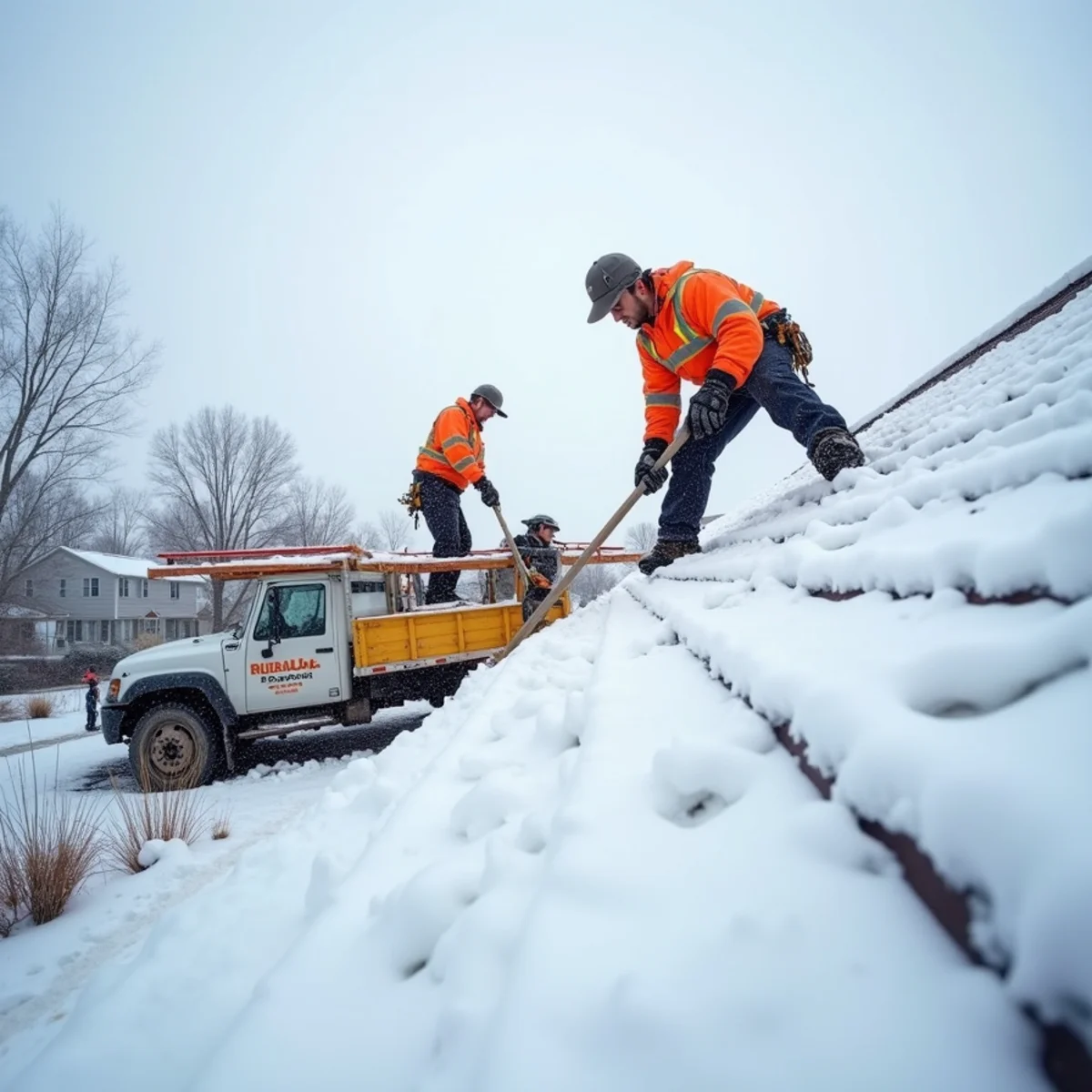
The safest way to clear a roof is a roof rake used from the ground, pulling snow off the lower edge. Do not climb onto a snow-covered roof, it is slick, and you cannot see hazards under the snow. For steep, high, or heavily loaded roofs, hire a professional with the right equipment. Removing snow the wrong way, or with metal tools that gouge the shingles, trades one problem for another.
Snow, Ventilation and Ice Dams
A deep snow pack also blocks the ridge ventilation your attic needs and insulates the roof deck, which, combined with heat loss from the house, feeds the melt-refreeze cycle that builds ice dams. Roofs in the snow belt benefit from strong attic insulation, balanced ridge ventilation, and ice-and-water shield at the eaves precisely because they spend so much of winter under snow. These are the same measures that protect against ice dams, and they earn their keep in Michigan City and La Porte.
When Load Damage Means Replacement
Sometimes a heavy winter reveals that a roof was already at the end of its life, decking that has softened, framing that has sagged, or repeated leaks that rotted the sheathing. When the structure itself is compromised, a full roof replacement with sound decking and proper fastening is the honest fix. Patching over rotted decking just delays the failure. Homeowners in Michigan City and La Porte, where the snow load is heaviest in the region, are wise to have an aging roof assessed before winter rather than during it.
Get Ahead of Snow Season
If your roof is older, has sagged, or has leaked before, do not wait for a lake-effect burst to find its limit. Call Anto Roof Replacement & Repair at (855) 705-1940 for an inspection. We will tell you honestly whether your roof is ready for the snow belt or whether it needs work before the deep snow arrives.
Where Snow Piles Unevenly and Why That Is the Real Danger
The picture most people carry is an even blanket of snow across the whole roof, but that is not how a roof fails. Wind and geometry pile snow deep in some spots and scour it thin in others, and those drifts are where the load concentrates. The most stressed places are almost always the same: the low side of a valley where two slopes dump into one channel, the base of a wall or dormer where a higher roof section sheds onto a lower one, and the roof of an addition tucked below the main house. A drift against a two-story wall can carry several times the load of the open field a few feet away.
This unbalanced loading is why a porch roof or a low addition often shows stress first in a hard lake-effect winter, even when the main roof is fine. The addition catches the slide-off from above on top of its own snow. If yours is a low-slope addition, our comparison of standing seam versus exposed-fastener metal is worth a read, because a slick metal surface sheds that load instead of stacking it, and snow guards then control where it lands.
- Rake the drift zones first, valleys and the base of walls, not just the eaves
- Clear the roof of an addition that sits below a taller section
- Pull snow evenly from both sides so you do not create an unbalanced load
- Stop a few inches short of the shingles to avoid gouging the surface
Homeowners across Porter County who understand where their roof concentrates snow can rake the two or three spots that actually matter, rather than exhausting themselves on the whole roof.
A Step Sequence for Managing a Heavy Lake-Effect Snowfall
The homeowners who handle a big snow event calmly are the ones who work a sequence instead of reacting once the ceiling cracks. When the National Weather Service Chicago posts lake-effect snow warnings for La Porte County, run through these steps in order rather than waiting to see how deep it gets.
- Before the snow: clear the gutters and confirm the downspouts are open, so the first thaw has somewhere to drain
- As it accumulates: note the depth and whether it is the light, dry kind or the heavy, wet kind that weighs several times more
- After a foot or more: rake the lower few feet of roof and the drift zones from the ground, never from a ladder on the roof itself
- Watch the inside: check for new drywall cracks, sticking doors, or creaking, which signal the structure is loaded
- If rain or an ice layer is coming on top of deep snow: treat the load as serious and get the roof cleared before it climbs further
The point is to act on weight, not depth, and to keep both feet on the ground while you do it. Much of the before-the-storm work overlaps with our fall roof and gutter checklist, which is the right time to fix anything that would fail under load. If you see the warning signs of overload or water starts coming in, that is the moment for emergency roof repair rather than another pass with the roof rake.
How Building Codes Set Your Roof’s Snow Capacity
When people ask how much snow a roof can hold, the honest answer starts with the building code, which assigns every area a ground snow load in pounds per square foot. For much of the lake-effect belt in La Porte County that figure is meaningful, and engineers translate it into a roof design load using factors for slope, exposure, and how snow drifts against walls and additions. A steep roof sheds and carries less; a low addition tucked below a taller wall is designed for more, because that is where snow piles.
The catch for older homes is that these code minimums have risen over the decades, and a roof framed to a 1970s standard was never designed for today’s numbers, let alone for a wet, settled pack with a rain layer on top. That is not cause for alarm on a sound structure, but it is why an aging or previously modified roof deserves a real look before a heavy winter rather than during one.
- Ground snow load: the code’s baseline for your area, in pounds per square foot
- Slope and exposure factors that raise or lower the roof’s design load
- A drift surcharge where a lower roof meets a taller wall or parapet
- The unbalanced load a wind-driven drift places on one side of a ridge
None of this replaces watching for the warning signs of overload, but it explains why the drift zones fail first and why two roofs in the same storm perform differently. If a hard winter reveals softened decking or a sagging line, an honest assessment after the thaw, along the lines of our spring roof inspection checklist, tells you whether the structure was pushed past its design. Homeowners in lakefront pockets like Long Beach sit under the region’s heaviest loads and benefit most from knowing their roof’s real capacity.